Unknown's avatar

Is Love Worth the Pain?


We grieve because we love.

I learned a lot from grief.  I learned that my identity was as a wife, a mother and a daughter.  When I lost my husband, and later my dad, a lot of what made me feel whole seemed to disappear.  For years, I submerged myself in my role as “mom”.   I needed my kids as much as they needed me.  As they grew up and moved on with their lives, I again lost my touch point, my anchor.  Where did I belong?  How would I make a difference?  It was a struggle.  I forgot what it meant to be just “me”. 

Have you ever felt the effects of too much caffeine?  That jumpy, panicky feeling became normal for me.  Most days, I felt like I need to crawl out of my own skin.   On the days when my kids weren’t around or I didn’t have to work, I stayed in bed.  It was easier to sleep than to face my reality.   I didn’t keep up with my house or my yard.  I avoided being at home as much as I could.  I didn’t know how to ask for help.  I didn’t know if there was any help.  I was overwhelmed.  I was supposed to be strong and I was embarrassed to admit that I was failing in every area.  I just tried to keep my head above water. 

I lived this way for almost 10 years.  I knew I had to get used to my new “normal” and believed that I had dealt with my grief.  I helped with grief recovery groups.  I put on a good face.  I didn’t realize that I was living with depression.  All the things that had given my life meaning seemed to be disappearing.  My son and daughter didn’t need a hands-on mom.  I had accepted that I would live out the rest of my life alone.   It had been long enough.  I had to get over it all.  I had to close the door on the part of my life that wanted to be loved and accepted.

But, I had a friend that listened to me.  A friend heard what I said and what I didn’t really want heard.  He asked questions I didn’t want to answer.  He probed into areas that were off-limits.  He recommended counseling.  He encouraged me to trust again.  He challenged me to open the doors that I had closed and sort through those emotions and dreams.  He waited patiently to be allowed into all areas of my life. 

There are many that question the choices I’ve made over the last four years.   And, there are those that frankly, just disapprove of the life I now have.  I’ve heard the whispers and I’ve seen the looks.   I don’t have any doubts that I am exactly where I need to be.  I married my dearest friend.  I have never felt safer or more secure.  I am loved deeply and completely.  Our life is not without its challenges and frustrations, but we face them together. 

I have learned that grief is love turned upside down.  I will never give up the opportunity to experience a deep and passionate love in order to avoid the pain of grief.  Love is worth EVERYTHING!

Unknown's avatar

Decisions = Consequences

Decisions are an everyday part of life. And every decision results in a consequence of some kind, good or bad.  If I decide to turn off my alarm and sleep an extra 30 minutes, the consequences are rushing to get ready for my day and leaving the house a later than usual.  For every 5 minutes later that I enter the freeway, I reap an additional 10 minutes in Houston traffic.  Was that extra sleep really worth the added stress to my day and drive?  Honestly, it depends on the day.  But, usually, I regret that decision to stay in bed.  And yet, I have this conversation with myself every single morning.

We all make decisions. We decide to do the dishes tonight or wait until later.  In school, it was when (or maybe if) I would study for a test or do my homework.  Every interaction with others begs a decision:  will I be kind and respectful, distant and unattached, or pushy and rude? Sometimes a decision to NOT decide becomes your decision by forcing another to make the call.  At least that way, I have plausible deniability, right? It’s not really my responsibility, because YOU decided this one.  Why is making a decision so daunting at times?  Even when it’s a “good” decision, we seem to fear the consequences of our very actions.  Why?

Maybe this is what we fear: ME.  My “personal preference meter” isn’t a very reliable source for making decisions.  When MY happiness, MY comfort becomes more important than how it affects the ones that depend upon and trust me, the consequences may be difficult to live with on a long term basis.  Our society has become more and more focused on doing what is makes “me” happy as the optimal decision bias.  Even though reality proves that the “happiness” is fleeting and this temporary enjoyment could very likely lead to long term misery.

We’ve seen evidence of this all throughout the Bible: Eve chose to eat the apple;  Abraham had a son with Hagar;  David gave into his desire for another man’s wife with Bathsheba.  There are examples in our lives every day:  telling the “white” lie to cover-up; condoning gossip and back-biting in order to be accepted; sneaking around outside of your marriage to get some “excitement”.  We have come to believe the absolute lie that we deserve happiness.  Truthfully, no one deserves happiness.  Happiness is a daily choice, NOT a destination.  You can chase happiness, but you will not find it.  And when our decisions are based on finding happiness, the consequences will be empty and quite often painful.

So, in this carnival we call life, when we choose all the fun and exciting regardless of personal morals or conscience, consequences can be overwhelming. Much like too much time on the Tilt-a-Whirl you are left off-balance, dizzy and maybe a little ill.  When the excitement wears off and the happiness is no longer palpable, guilt moves in to fill the void.  You can’t go back and undo your actions or unsay the words.  You can only live within this moment.  Eve chose the apple and mankind would forever have sin in our lives.  The consequences of Abraham’s choice to have a son with Hagar are still being played out in our world.  In an attempt to cover up his wrong decision, David would go on to commit murder and saw his own son eventually turn against him.  But, in each case, these people continued to seek God.  They were now on a different path in life and God would use them anyway.

We’ve all heard the saying “You made your bed, now lie in it.” The consequences will be there, even after forgiveness.  We must choose to make better choices and decisions.  Decide to move forward toward God’s will and plan for your life regardless of the current situation.  Avoid getting caught up in the endless whirlwind of running toward the next “ME” moment.  Accept the consequences and work through them.  Look out for those who depend upon you and put their needs first.  Make the decision to be happy today, where you are, even if you can’t understand how that could possibly happen.  You won’t make an instant difference, but you will invest in the future.

Consequences, both good and bad are what we reap. Make your harvest one of which you are proud.

action

“Well, you’ve made your bed – now lie in it; you wanted your own way – now, how do you like it?” Proverbs 1:31  MSG

Unknown's avatar

“If you can’t say something nice. . .”

We’ve all heard that phrase:  “If you can’t say something nice, don’t say anything at all.”  I’ve said it to my own children when they were busily calling each other names or tattling on each other.  But, I have recently realized, that this phrase has taken on a whole different meaning in my life.

My internal voice tells me that nice people never get angry, so there must be something wrong with me when I get irritated, annoyed or mad.  I avoid situations and interactions with others that have made me angry in the past.  Rather than confront the pain/anger, I’ve become very adept at “not seeing” those persons.  I’ve been told that I don’t “do guilt.”  That’s not at all true.  I’ve just learned to hide all my guilty feelings.  If I don’t see them, I don’t have to feel guilty for the way I feel.

This internal voice also tells me that nice people always agree and swallow their own differences for the sake of being nice and preventing others from being irritated, annoyed or mad.  This has been a hard lesson for me.  When I’m asked for my opinion, I usually give it.  Why would anyone ask me if they didn’t really want to know what I thought?  However, the vast majority that ask don’t really want to hear what I have to say.  They expect agreement and support from me.  I’ve been told that I didn’t know enough to have that opinion.  I’ve been told to work things out within myself and “wrap my head around” an issue (meaning come to see “the right” opinion.)  I’ve been threatened in work situations when I didn’t automatically agree.  So, I’m very careful when it comes to being open with my feelings or opinions.  It’s better to be stoic than honest.

My therapist once asked me what kind of animal I felt represented me.  My answer was a possum.  A possum is useful in getting rid of unwanted pests. A mother possum is a fierce protector of her children and carries them around with her.  But, a possum is ugly.  It slinks around in the dark.  When confronted, it plays dead.  But, I want to be a flamingo.  A flamingo is beautiful.  It spends time in the open, eating and just being beautiful. Flamingos are members of a flock, and raise their babies together.  Everyone loves the flamingo.

I recently read a devotional taken from Joyce Meyer’s book, “Battlefield of the Mind” that said:  “We should choose our thoughts carefully. We can think about what is wrong with our lives or about what is right with them. We can think about what is wrong with all the people we are in relationship with or we can see the good and meditate on that. The Bible teaches us to always believe the best. When we do that, it makes our own lives happier and more peaceful.”

I am attempting to rewrite my internal messages.  I don’t think anyone should purposely hurt or offend others.  Name calling is a childish behavior and should be avoided.  I do, however, need to be honest.  And being honest about my hurts and my feelings may not feel nice to others.   I may not do some things in order to keep the peace or because it’s the expected thing to do.   I may still avoid situations and interactions with others to avoid unnecessary confrontations.  And, I refuse to feel guilty for putting my husband and children as a priority in my life.  I will live my life to the fullest and stop worrying about the approval of others.

“I call Heaven and Earth to witness against you today: I place before you Life and Death, Blessing and Curse. Choose life so that you and your children will live. And love God, your God, listening obediently to him, firmly embracing him. Oh yes, he is life itself, a long life settled on the soil that God, your God, promised to give your ancestors, Abraham, Isaac, and Jacob.”

Deuteronomy 30:19-20 MSG

Unknown's avatar

Lonely vs Alone

I’m an introvert. I draw energy from being alone.  I need time to process information.  Interacting with people, whether family, social or strangers results in my need to withdraw  and to spend time alone to re-energize. Small talk and pointless conversations are exhausting to me.  It doesn’t take loads of alone time for me to recharge.  Just a few minutes in the evening or a Saturday morning just “piddling” in my office will suffice.

An extrovert won’t always understand the need for “alone” time. Extroverts often equate being alone with loneliness.  Being alone doesn’t have to be lonely.  Loneliness is painful and sad.  Depression and remoteness are the results of loneliness.  Alone time is energizing and breeds creativity and calm.  Being alone allows the introvert the opportunity to process the days events, the ability to download and file away the day’s emotions and make necessary decisions.

I have been lonely.  I was that person  who seemed to have it all together, but would eat take-out in the driveway rather than face the quiet of the house.  I am the one who spent entire weekends in bed.  Sleep filled the loneliest times.  I’ve done the things that had to be done on my own, because that was required.  I’ve sat through numerous  family and social events all alone, surrounded by happy couples.  I’ve been forgotten on the way to a family funeral because everyone had someone else to consider and besides,  I’m very capable.

For ten years, I was the lonely person coping with doing most things alone.  A few years ago, I was rescued from the loneliness.  I have a partner in my husband.  I believe we bring out the best in each other.  There are still things that I have to accomplish alone.  And there are days that my extrovert husband questions my need to be alone.  But, I’m no longer lonely.  I refuse to be the lonely person in the midst of the couples.  I can admit that I don’t have it all together and trust that there is someone upon whom I can depend.  I am no longer lonely.

“God said, “It’s not good for the Man to be alone; I’ll make him a helper, a companion.”   Genesis 2:18  MSG


Unknown's avatar

Struggles

I have begun and stopped at least a dozen posts.  There’s so much I want to say, but the thoughts seem incomplete and unimportant.  I struggle with what to say, what to share.  I see so much around me, both good and not so good.  But, putting the words around those moments has proven difficult.

I watch friendships that come and go for so many reasons.  I don’t think all relationships are meant to last forever. There are some people that come into our lives for a season and then we move on in different directions.  What I’m seeing, though, are relationships that are coming apart because there are so many conditions that are set forth.  The most common condition:   “I can’t spend time with you if he/she will be there”  or the more definitive “You have to choose, it’s me or him/her.”  But the most interesting spin on these conditional friendships is that the conditions are usually not reciprocal.  The same person that forces the choice also requires unconditional acceptance of all of his/her own relationships.

I see snap judgments made with very little knowledge of the circumstances.  It’s easy to jump to the obvious conclusions.  It’s much harder to look through the  details and find out the circumstances that surrounded the event or person.  Not all information that is provided through the news or social media is complete or even correct.  I remind myself that a cup of salt and a cup of sugar look a lot alike, but they impart very different results.  It’s time to stop assuming everything is at face value and look deeper.

I realize how easy it is to forgive and forget a “pet” sin.  Adultery, promiscuity, little white lies, petty theft are easily excused and often expected by the majority of the population.  But, make a mistake or forget something that is involved with one the “causes of the day” and expect be hung out to dry.  Political correctness, bullying, gun control are all examples of causes that get a lot of attention very quickly.  One misstep and you are toast.

I mourn the loss of discipline in the home and schools.  Where are the strong parents that created strong homes to provide the framework for successful children?  Instead, we have given rise to the “helicopter” parent that is just trying to force the schools and society to adapt to “MY CHILD”.  Where is the discipline in schools that commanded respect? It has been eroded away, bit by bit, by the parents who see no wrong in their own special and perfect hell raiser and the leadership that is afraid of repercussions.

I’m exhausted by the total obsession with “me, myself and I” that surrounds us.  All of the above would be remedied by taking time to look around and try to understand.  But, I can’t see others if I’m focused on me.  Am I a cup of sugar or a cup of salt?  How will I affect the recipe of life around me?


Unknown's avatar

When the Mirror Cracks

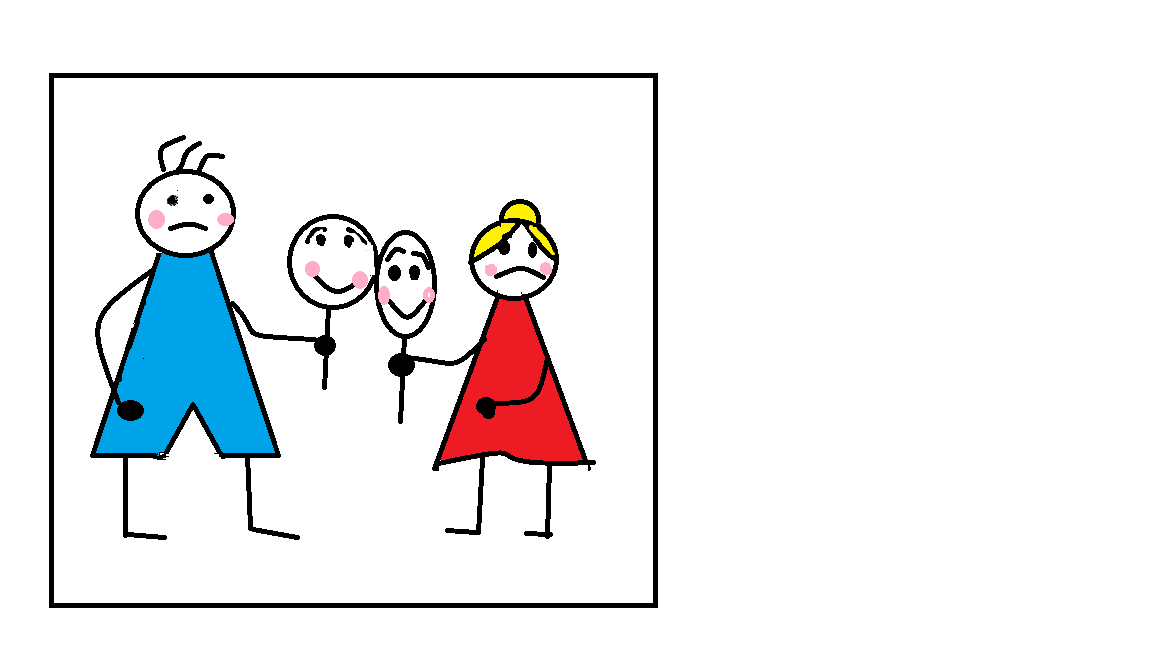
maskedWhen I was in a high school Home Economics class, I was frustrated by my inability to sew a perfectly straight hem on a summer top.  I had ripped out sections and resewn it over and over.  I remember Mrs. Brown telling me that it was “straight enough for an active teenager.”  So, I finally stopped trying.  Whenever I wore that top, I would look at the bright green stitching and see the stops and starts of that hem.  It was an example of my struggles to be perfect.  As an adult, I worked in a building that had mirrored elevators. I never enjoyed those elevators. The light was harsh and the reflection never looked as good in those mirrors as in my home mirror. As a result, I tried not to look at the elevator reflection. I didn’t like it, so I ignored it and looked the other way.

We all have ideals in mind. Perfect hair, a perfect body, the perfect relationship. We strive to be the perfect parents and rear the  perfect family.    I tried to be the best at everything.  If I wasn’t sure I would be the best at something, I just didn’t try.  Failure was not acceptable in my world.  It’s easy to pretend life is perfect. Social media is quite handy when creating the “perfect” picture.  If we could only ignore the mirror of truth!

Too often, when the realization dawns that this perfect world doesn’t really exist, the goal mutates.  It becomes  extremely important to maintain the illusion of perfection.  We’ve all known the woman who posts about her perfect family with perfectly posed pictures amid the chaos of teen drug use and spousal abuse.  You’ve probably had a conversation with someone about how much they dislike spending time with a dysfunctional parent only to see the “best parent in the world” posted  on social media.  Or maybe, you’ve been with that couple that profess to love each other and to be excited about their life together.  But, they only complain about their partner  in private.   Truth is lost in the illusion.

I know how easy it is to fall under the spell of “the need for approval”.  It is so very hard to keep the facade in place.  I have worked to make sure those around me are content and happy.  I have been known to jump through hoops to take care of things for my children.  I have worked long hours and take criticism very personally even when it’s not meant to  be.   My desires often take 2nd (or 3rd) place behind those of my family members.  All of this in an effort to be “good enough”.   And more often than not, I fail.

With help, I’m learning that I am already “good enough.”   I can only do my best.   If others are not happy with my choices in life, I cannot change that.  I can choose not to spend time with those that continue to manipulate with disapproval.  I’ve learned so much about grace and forgiveness over the past two years.  I’m learning to accept and even embrace what I see in my mirror.

Is your mirror cracked?  Will you break free in 2018 and be the true and honest version of yourself?


“What this adds up to, then, is this: no more lies, no more pretense. Tell your neighbor the truth. In Christ’s body we’re all connected to each other, after all. When you lie to others, you end up lying to yourself.”  Ephesians 4″:25 MSG


Unknown's avatar

Marriage: Democracy, Dictatorship or Equal Partnership?

I recently posed this question on Facebook:

How do you define marriage?  Would you say marriage is:
  • A Democracy where everyone gets a vote
  • A Dictatorship where one person is responsible for decisions and directions of the relationship.
  • An Equal Partnership where EVERYTHING is shared equally
For this discussion, marriage is defined as the legally or formally recognized union of two people as partners in a personal relationship. Historically, in most cultures, married women had very few rights of their own. But for purposes of this writing, marriage refers to the general definition of marriage in the western world; specifically the U.S.

Most that commented defined marriage as all of the above.  Other common thoughts were we should marry our best friend and that marriages should emulate Jesus and the Bride of Christ.  And, I would agree with “all of the above”.

In the New Testament, the image of Christ coming for his bride is presented.  It is through these scriptures that we see the devotion of the bridegroom and the readiness of the bride.  The ideals of commitment, love and servant-hood are woven throughout the picture we are given.  It’s the perfect blending.

Unfortunately, today’s marriages are not that perfect.  I would venture that most of the couples that get married or are planning to marry in this day and age envision a 50-50 partnership.  Everything is shared:  money, household chores, care of the children, etc.   This is an almost impossible ideal to meet.  One or both of the people involved will feel that they are giving more than their 50%, whether it’s through money earned and contributed  or time spent around the home.

When the Equal Partnership doesn’t seem to providing on the equality front, democracy may come to the forefront.  Both sides begin to “campaign” for their own interests.  Both sides are able to lay all their cards on the table and come to an agreement on how responsibilities, money, time, etc. should be divided.  During rational times, this is a good method.  The flaw comes to play when there in no “majority”, no winner or agreement.  And that’s when, the marriage often moves into the Dictatorship phase.

In a dictatorship, one person is responsible for decisions that are made.   There are circumstances where a decision has to be made whether it is popular or not.  The “dictator” makes that decision and proceeds for better or worse.

In a healthy marriage, all of the things occur.   We both work.  My job keeps me away from home a majority of the day and as a result, most of the cooking and household decisions fall on my husband.  We don’t split them equally at all.  I try to do my part on the weekends.  And, he does ask for my help, too.  There is no “honey-do” list that must be completed for either of us.  When decisions arise that are not of the day-to-day variety, we do discuss them and try to come to an agreement.  There here have been times when my husband has had to make decisions that I could not or would not make.  I didn’t necessarily like it, but I knew that it was for the best and I would acquiesce to his authority at that time.  And, I’ll be honest, there are times that I have done the same thing.  So, you can say that my marriage is all of the above.

Many relationships fail because the “mix” isn’t palatable.  One person may feel they do “everything around the house”.  Or,  they don’t feel they have a say in any of the decisions made.  Maybe one person is a perfectionist and likes things done a particular way and just can’t accept any variations.  The key to getting through all of this is communication.  You have to be able to talk.  What you may perceive as laziness on your partner’s part, may actually be hopelessness because nothing will please you.  Or, it may be defensiveness: no adult wants to be treated like a child in their own home.

Customs and traditions concerning marriage in this country have morphed over the years. Cohabitation has increased by nearly 900% over the last 50 years. The focus often becomes “THE WEDDING” instead of the marriage. The average cost of a wedding is at an all time high of $31,213.  On average, researchers concluded that couples who lived together before they tied the knot saw a 33 percent higher rate of divorce than those who waited to live together until after they were married. Part of the problem was that cohabitors, studies suggested, “slid into” marriage without much consideration. Instead of making a conscious decision to share an entire life together, couples who shared a dog, a dresser, a blender, were picking marriage over the inconvenience of a break up. Meg Jay, a clinical psychologist, outlined the “cohabitation effect” in a widely circulated New York Times op-ed in 2012.

When we look at marriage as a life-long commitment to serve our partner not just as an escape from life alone, the decisions we make and the actions we take may be different.  We may have to leave behind the baggage of past family relationships.  Just because our parents did it this way, doesn’t mean that it’s the best decision for our family.   If my goal as a wife is to serve my husband to be best of my ability, to provide for his comfort, to encourage  and support him, to love and treat him as my best friend, then our marriage will survive and maybe even prosper.  But, it takes a conscious decision to be that servant.  It means that I don’t always get what I want.  It means that I may have to accomplish everything on the honey-do list instead of demanding my husband does so.  Someone else will have to take priority over me.

That’s the example that Christ gave for his bride, the Church.

“Wives, understand and support your husbands in ways that show your support for Christ. The husband provides leadership to his wife the way Christ does to his church, not by domineering but by cherishing. So just as the church submits to Christ as he exercises such leadership, wives should likewise submit to their husbands.
Husbands, go all out in your love for your wives, exactly as Christ did for the church—a love marked by giving, not getting. Christ’s love makes the church whole. His words evoke her beauty. Everything he does and says is designed to bring the best out of her, dressing her in dazzling white silk, radiant with holiness. And that is how husbands ought to love their wives. They’re really doing themselves a favor—since they’re already “one” in marriage.
No one abuses his own body, does he? No, he feeds and pampers it. That’s how Christ treats us, the church, since we are part of his body. And this is why a man leaves father and mother and cherishes his wife. No longer two, they become “one flesh.” This is a huge mystery, and I don’t pretend to understand it all. What is clearest to me is the way Christ treats the church. And this provides a good picture of how each husband is to treat his wife, loving himself in loving her, and how each wife is to honor her husband.”
Ephesians 5:22-33 MSG
Unknown's avatar

Be Still, Just be Still

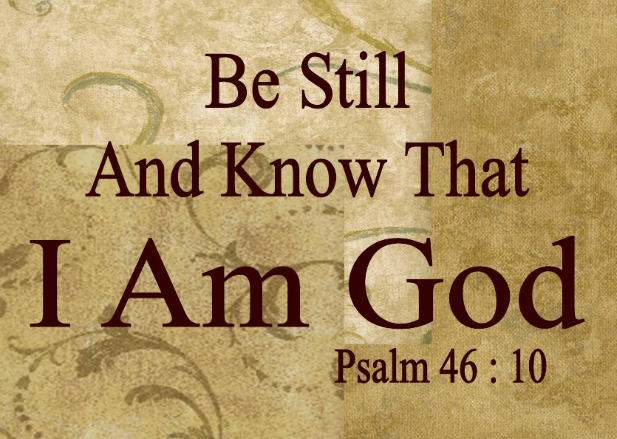
be still

Being still is hard.  Sometimes, it feels impossible.  It’s especially difficult for me when anxiety is running wild.  We all have moments of anxiety.  But for some, anxiety is ever-present.  It’s often linked to depression.  And, it can be exhausting.

Have you ever had so much caffeine that you can’t seem to put a thought together and just felt jittery?  That’s what anxiety felt like to me.  Anxiety is defined as stress that’s out of proportion to the impact of the event, the inability to set aside a worry, and restlessness.  When I feel that things are getting out of my control, I can get extremely restless and fidgety.  My thoughts are not always logical.  Everything around me can feel irritating.  I have a need to “fix it” or “hide from it”.

My first husband’s death sent me into a tailspin with grief.  I didn’t know how I was going to manage.  I didn’t want to manage alone.  The fears were so strong and so deep that just deciding what to wear in the morning was almost too big of a decision.  I wanted to know where my kids were at every moment.  I had nightmares,  so I didn’t sleep much.  I spent hours just walking in circles around the living room in the middle of the night.  As the months and then years passed, I believed that I was getting over it all.  But, the reality was:  I had just gotten used to coping with the anxiety and depression.  I could put on a good face for friends, family and co-workers.  I scheduled as much into my week as I could.  I worked full-time.  I volunteered with my church.  I volunteered for activities at the school my kids attended.  I stayed as busy as I could.  My kids grew up and life slowed down.

I found comfort in concentrating on anything.  Most people would call it obsessing.  Terry and I had dreamed of replacing our wedding dishes with depression glass.  So, I set about doing just that on Ebay.  I bought platonite place settings and serving dishes.  I bought emerald-green depression glass.  I found a particular glass goblet that I liked and bought a whole set in emerald-green and red as well as matching cocktail glasses.  I collected peanut butter glasses with state flowers.  I hunted for cottage cheese bowls (I had 5 different colors.)  I bought leather purses.  My kids would joke about all of the boxes I was getting.  I collected flamingos for the yard and for the house.  When I was looking for new things to buy, I didn’t have to face my life.

When both of my children left home, I had a more difficult time filling the time.  I would cook a big elaborate meal once a week and my son would come and eat.  But, the rest of the week, I would buy take out and eat in my driveway.  On weekends when my daughter wasn’t coming home or I wasn’t going to see her, I would just stay in bed and watch TV and sleep.  The only reason I would get up was to let the dogs out.  I avoided the reality of my life as much as possible.  Things that should have been important, just weren’t any more.  I felt like my life was over and I was just waiting it out.  I prayed and studied, but nothing seemed to make a dent in the numbness that had become so normal for me.

I had convinced myself that I was “just fine.”  I had worked through all of my issues.  As Tim and I began to talk about a future together, my very tightly wound ball began to come undone.  Emotions and feelings that I had not allowed to surface for years were suddenly in full view.  It was at that time, I sought the help of a counselor.  It took a few tries to find a good fit, but it was worth it.  I could sit and talk about my fears and doubts.  I began to work on issues that had been around for way too long.  I began to feel that I was gaining control; I was becoming a whole person again.

I was no longer afraid of being alone, of being still.  I realized that I needed time alone to spend with my Bible and in prayer, writing or drawing.  I had allowed grief to become self-doubt and fear.  I stood by as the enemy had robbed me of the ability of “being still”.  I had to learn, again, what peace comes with knowing God.

Stop the busyness.  Look at what God has for you.  Listen for His leading.  Be still.

Just be still.

Unknown's avatar

Counterfeit Living

When I was a teenager, I was told that I should never watch soap operas.  The reason was simple:  they portrayed lives that were not realistic.  The women were always perfectly coiffed and dressed.  The men loved to talk about EVERYTHING.  Life was not that exciting or interesting.  This was reinforced when I was touring Europe with the United States Collegiate Wind Band the summer of 1978.  When the family I was staying with in Buitenpost, the Netherlands found out I was from Texas, they immediately asked how many oil wells were in my back yard.  They watched “Dallas” on television and  believed it to be the ‘real’ Texas.


Fast forward to today.  We still have the fantasies created by television shows.   And,  we have added reality TV & social media to shape the way we view life.  All of these work together to create an unrealistic view of what life SHOULD be and how we SHOULD be living.  As a result, there are many, many individuals living counterfeit lives.  They are busy making things appear as they “should” and avoiding the reality that is life.

social media


Have you talked to anyone that is of dating age recently?  Most of them talk of getting married, buying a home and starting a family.  But prevailing wisdom of today is to live together.   The reasoning is that you can be sure it will last without the “big” commitment.   But the reality is “I just don’t think it’s worth waiting until I’m married”.  I remember being asked about waiting for marriage as a 20-something.  The question was “What if the sex isn’t good?”  My response, “If I don’t have anything to compare to, how will I know the sex isn’t good?”  I was also raised to value myself  and to know that marriage is more that sex.  It’s commitment and building a life & family together.  I’m not saying that waiting is easy.  It is definitely not! And, the further down the path you go the more difficult it is to stop.  What I am saying is that anything you value is worth the wait.  You save money for a house, instead of buying a tent because “all my friends are”.

Counterfeit living is grabbing for all the advantages of life without any of the real commitment.  Counterfeit living is pretending you are married when you are just “shacking up”.  Counterfeit living is escaping into something (alcohol, drugs, shopping, games, television, etc.) to avoid facing a reality you don’t want to see.  Counterfeit living is pretending you value yourself, but willingly give yourself away for the illusion of “living the life”.

Reality can be hard.  Reality may mean walking away from something you really want in order to grow into a better person.  Reality may mean saying “No” to pleasures that you don’t want to miss, but realizing you are worth more than the momentary pleasure.  Reality may mean giving up control for just a moment and allowing others to  follow their own path.  Reality may mean manning up and facing the life you have chosen without whining or  tattling about the person you “love” so much.

When my husband and I were dating, I told him I just wanted to make him happy.  His response was “You are not responsible nor capable of making me happy.  I choose to be happy or not.  You can only provide opportunities for me to choose happiness.”  Not very romantic, but entirely true.  If I’m looking for circumstances or people to make me happy, I will never get there.  I must choose to be happy in the circumstances I am presented with at the time.  Real life doesn’t always provide opportunities for happiness.  But, when the opportunities do arise, they are marvelous.  Because,  I can  know the opportunites are real and solid and I can trust them.  I can choose to be happy.  I can choose JOY!  Counterfeit living will never provide that.  Counterfeit living will only cause questions to arise:  “Is this real?  Will this last?”

And for me, the only way to cope with reality is to turn to my faith.

Take delight in the LORD, and he will give you the desires of your heart.”  Psalm 37:4 

“Whoever gives heed to instruction prospers,and blessed is the one who trusts in the LORD.”  Proverbs 16:20

There are many people who have successful marriages after living in premarital relationships.  And, I know many of them also live with years of guilt because they didn’t stand up for their own convictions.  They will always have that small question “Would we still be together if we had waited?  Was I worth it?”

I challenge you to look at your own life.  Are you living in the reality of life with all of its struggles and joys?  Are your walls stripped bare for all the world to see?  Or, are you living in a counterfeit reality with facades that need constant attention and repair?  Facades that provide for more stress and less happiness?  When I was able to allow the facades to fall, I found an entirely new reality.  I found a reality where I didn’t have to the strongest or the smartest or the best.  I found there is contentment in just doing the best that I can in this moment.  I still struggle and at times try to hide behind the old walls, but I’m no longer trapped and afraid to be honest.

happines.PNG

Unknown's avatar

Would I Follow?

I am currently reading the book Seeking Allah, Finding Jesus.  This book is Nabeel Qureshi’s personal account of his life as he went from a devout upbringing in the Muslim faith to find that Jesus Christ was indeed his personal savior.  Throughout the book, the author talks of how simple it often was to shut down any Christian that tried to talk to him about faith in Christ.  The reason it was so simple: the  Christians had only a head knowledge of the “whys” of their own beliefs.  They could not back up the normal rhetoric that is given to prove their beliefs.

I have been struck by many parts of this book.  Most of all, I have to face that many of us cannot defend the faith we say that we have.  Nabeel studied the Bible to be able to  refute the usual comments.  It wasn’t until he met someone who was willing and able to give him facts that Nabeel began to truly “hear” the message.  On the flip side, Nabeel also had to come to terms with the fact that much of what he knew of his Muslim beliefs were based on what he had been told.  Studying the Qur’an and other documents as he defended his childhood religion was very unsettling for him.    Even though he have read the entire Qur’an by the time he was 5 years old, he didn’t know or understand much of the basics of his faith.

Nabeel Qureshi’s decision to follow Christ was not an easy choice.  It took years to get to that decision.  He had to weigh giving up EVERYTHING in order to follow the Christ of the Bible.  This decision caused immense pain for both of his parents.  In “Christianity Today”, he made this spoke about the effect his conversion had on his family:

“A few days later, the two people I loved most in this world were shattered by my betrayal. To this day my family is broken by the decision I made, and it is excruciating every time I see the cost I had to pay.
But Jesus is the God of reversal and redemption. He redeemed sinners to life by his death, and he redeemed a symbol of execution by repurposing it for salvation. He redeemed my suffering by making me rely upon him for my every moment, bending my heart toward him. It was there in my pain that I knew him intimately. He reached me through investigations, dreams, and visions, and called me to prayer in my suffering. It was there that I found Jesus. To follow him is worth giving up everything.”

I have to ask myself, “Would I do this?”  I’ve lived a pretty easy life.  Sure there have been bumps along the way, some of them very big bumps.  When my first husband died, I struggled with my faith.  I reviewed all that I said that I believed.  And, I concluded that my faith in God was correct and real.  But, I was never required to give up everything:  my family, my core beliefs, the familiar.  Would I do that?  Could I defend my beliefs to another in a logical and cohesive manner?  Would I be able to give details and truth?  I wish I could give a resounding YES, but I’m not sure.

My family and I have been watching the Leah Remini show on Scientology.  I often sit in astonishment at what people are willing to do and to give up for their beliefs in this “religion”.  While reading Seeking Allah, Finding Jesus, I have a different understanding of the Scientology followers:  they too risk everything for their beliefs.  The difference?  Nabeel Qureshi’s Muslim upbringing did acknowledge parts of the Bible and recognize some of the same people as Christianity (although differently), he had a basis to build upon when confronted for Christianity.  He was willing to debate and discuss to prove his point.  Scientology doesn’t allow any questions.  There is no debate.  It’s all or nothing.  As we have listened to people who have left Scientology, it is so sad to see that most have still not found salvation in Jesus.  How do we as Christians help to fill the void?  How do we take steps in this tender and painful area of trust for people’s of any faith that are hurt and searching?  Do we really care?  Do we really want to step out?

Again, I’m not sure.  It’s more  convenient to throw a tract or book at someone than to interact with  them in any depth.  It’s emotionally safer to invite someone to church than to sit down and have coffee and talk over  and over again.  It’s easier to only communicate about God when you need something by asking  for “a little prayer for _____”  instead of getting involved with God on a daily basis with His people.  It’s less intimidating to just mind my own business and let someone else do the hands on stuff.

I’m challenged.  I’m struggling.

For you see, standing up for one’s beliefs to those in your closest circle of family and friends can be hard, especially if they don’t agree.  It takes balance to lovingly rebuke those who claim to be Christian and  do not live as such.  It takes a measured patience to be ridiculed as “old-fashioned” and “out of touch” when you have lived and may actually have a basis for this “old-fashioned” and “out of touch” advise.  The easiest road may not be the best choice and momentary laughter does not mean a lifetime of joy.

Nabeel Qureshi passed away after a year-long battle with stomach cancer on September 16, 2017 at the age of 34.   His parents were helping to care for him during his illness.  I am so fortunate to have his story from which to learn.  He has touched and continues to touch many lives with his stand for Christ.

Would you follow?